
To bring us to this state, Buddhism points us to lasting values in this impermanent world and gives us valuable information about how things really are. Through understanding the law of cause and effect, using practical tools like meditation to gain insight and develop compassion and wisdom, we — all of us — can tap into our potential to realize the ultimate goal of enlightenment.


The historical Buddha was born in approximately 570 BC in Northern India. After a long search, in deep meditation he recognised the nature of mind and reached enlightenment. The Buddha’s teachings, which make beings fearless, joyful and kind, are the main religion in several East Asian countries. Since the early seventies, the profound Buddhist view, with its vast number of methods, has inspired and fascinated a growing number of people in western cultures. Through his teachings Buddha is seen as a timeless mirror of mind’s inherent potential.
Buddha taught on what exists ultimately and on what is conditioned, in a way that is directly relevant to our daily lives. Understanding this makes the experience of lasting happiness possible. Buddhism does not proclaim dogmas, but encourages critical questioning. Through the right meditations, the intellectual understanding of the teachings becomes a personal experience. Additional methods solidify levels of consciousness that have been reached. The goal of Buddha’s teachings is the full development of the innate potential of body, speech and mind.
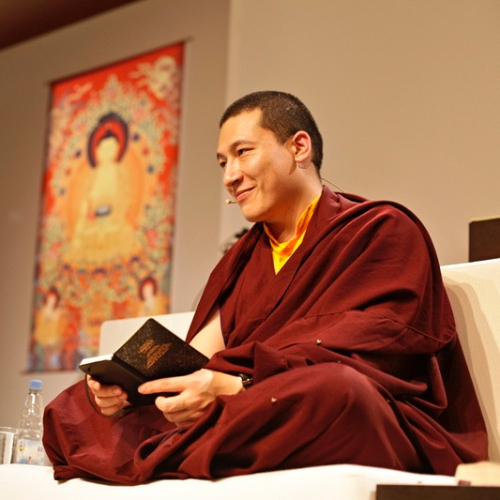
Buddha taught on what exists ultimately and on what is conditioned, in a way that is directly relevant to our daily lives. Understanding this makes the experience of lasting happiness possible. Buddhism does not proclaim dogmas, but encourages critical questioning. Through the right meditations, the intellectual understanding of the teachings becomes a personal experience. Additional methods solidify levels of consciousness that have been reached. The goal of Buddha’s teachings is the full development of the innate potential of body, speech and mind.

Meditation in a Buddhist context means ‘effortlessly resting in the here and now’. This state can be achieved through methods such as ‘calm abiding’ and ‘insight’ meditation; by working with inner energies; or through focussing on Buddha forms of energy and light. The most effective way however is to identify with one’s own Buddha nature – as is taught in Diamond Way Buddhism. The goal is to keep this highest view not only during, but also in between meditation sessions.

Karma means ‘cause and effect’. It is not ‘destiny’ or ‘fate’. Everyone is responsible for their own life and shapes it through thoughts, words and actions. This understanding enables one to consciously create impressions that lead to happiness and avoid future suffering. Useful karma that has not ripened yet can be strengthened by using the skilful means of Diamond Way Buddhism; destructive karma can be dissolved before it causes problems.
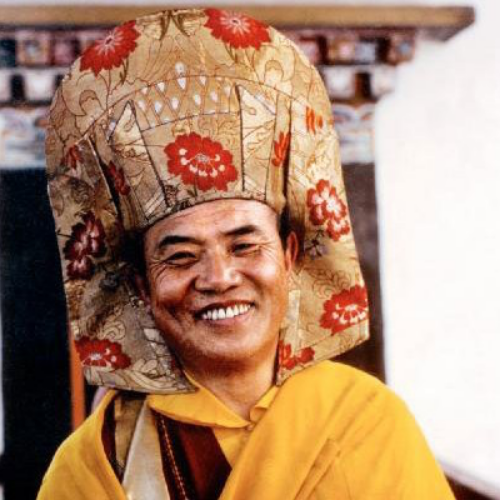
Liberation means to recognise that one’s body, thoughts and feelings are in a state of constant change and hence cannot form a real ‘I’. One no longer experiences oneself as the target, which is the cause of all suffering. From this state, full enlightenment naturally follows. Here the clear light of mind radiates through every experience. The separation between the one who experiences something, the object of the experience and the experience itself has disappeared. Mind enjoys the qualities that arise in and by itself in every moment and is effortless and spontaneous in all situations.

Buddhism offers “effective methods that lead to a direct experience of mind,” says Lopon Tsechu Rinpoche, one of the most experienced teachers of Tibetan Buddhism. Buddha’s teachings are like a diamond – unchangeable in nature, yet reflecting the color of the ground upon which it is laid. In this way, without losing their essence, the teachings have adapted to the cultural conditions of different societies and times.
The teachings were first transmitted in India for 1500 years, and after that for another 1000 years in Tibet. Today, the limitlessness of the Diamond Way (Vajrayana) Buddhist view and its methods are more and more appealing to the well educated and independent people of the West.
There are now over 600 meditation centres in 44 countries worldwide, with active and energetic centres in North and South America, Russia, Europe, the UK and Oceania. Lama Ole Nydahl works with these meditation centres under the spiritual guidance of the 17th Karmapa, Thaye Dorje.
Diamond Way meditation centres have a democratic structure and function through unpaid, voluntary work on the basis of friendship and idealism. Members share the responsibility for guiding meditations, answering questions and giving teachings. More than 200 of Lama Ole Nydahl’s students are now travelling and teaching in many countries.
The Karma Kagyu School offers practical teachings applicable to everyday life. A wealth of methods are available for lay people and yogis to develop mind’s inherent richness and clarity, both through meditation and in one’s daily activities. The ‘roof’ of the self-liberating Mahamudra or Great Seal is supported by three pillars: verifiable non-dogmatic teachings, meditation, and the means to solidify the levels of awareness which have been attained. The Diamond Way offers the modern world the most skillful methods of the Buddha. It helps us discover and develop our inner richness, for the benefit of all beings and ourselves.

Karma Kagyu is one of the major schools of Tibetan Buddhism. As a lineage of direct oral transmission, it especially emphasises meditation, and through interaction with a qualified teacher can bring about the full and direct experience of the nature of mind.The Karma Kagyu methods were taught by the historical Buddha Shakyamuni to his closest students. These methods were later passed on through the Indian Mahasiddhas Padmasambhava, Tilopa, Naropa, Maitripa, and the famous Tibetan Yogis Marpa and Milarepa. In the 12th century, the monk Gampopa gave the teachings to the first Gyalwa Karmapa, whose successive conscious rebirths have kept the teachings alive and powerful to the present day.
Today, great Tibetan lamas and Western lay ‘travel teachers’ transmit this unbroken tradition when visiting the many Karma Kagyu Diamond Way Buddhist centers around the world.